

In my view, human creativity will always have a role in advertising, it’s just about to get substantially augmented by AI.
Creativity isn’t magic. It’s a process of combining ideas in new ways, and AI substantially improves this process primarily due to it’s capacity to at speed produce and process content.
Think about how humans come up with ideas. We absorb information from various sources, mix it up in our brains, and occasionally stumble upon something novel. AI can do this too, but at a scale and pace that we can barely comprehend.
Hill Climbing
Chris Dixon’s hill climbing analogy provides the solution to the question of the role for human creativity in advertising. In hill climbing, you keep taking steps uphill until you reach a peak. But that peak might not be the highest point overall - you could be stuck on a small hill, missing the mountain nearby.
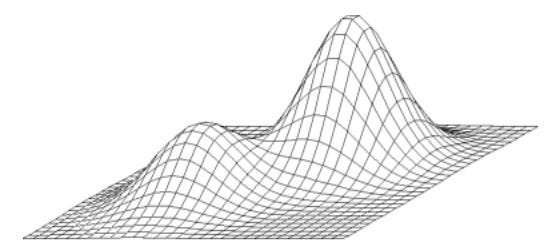
The solution? Add some randomness. Occasionally take a leap in a random direction. You might land somewhere worse, but you might also find a path to a higher peak.
This is eerily similar to how creativity works. The most innovative ideas often come from unexpected connections or “random” inputs.
AI generating randomness
To generate randomness, you can take inputs from lots of sources and then output them elsewhere. AI has superior capabilities in structure data processing. It can process inputs from lots of sources (RSS feeds, viral videos, trends) and tell what is performing well and badly and then recreate those.
The additional randomness can either be generated by humans or by random generators that experiment on random ideas. I suspect that this is where humans will dominate in their roles.
If done well, this should be superior to human creativity alone.
The demand for more randomness
I’m of the belief that this skill of generating randomness is about to be in super high demand, as attention spans have been decreasing over the past few decades, and based on my content work, the past few years, much more so in recent years.
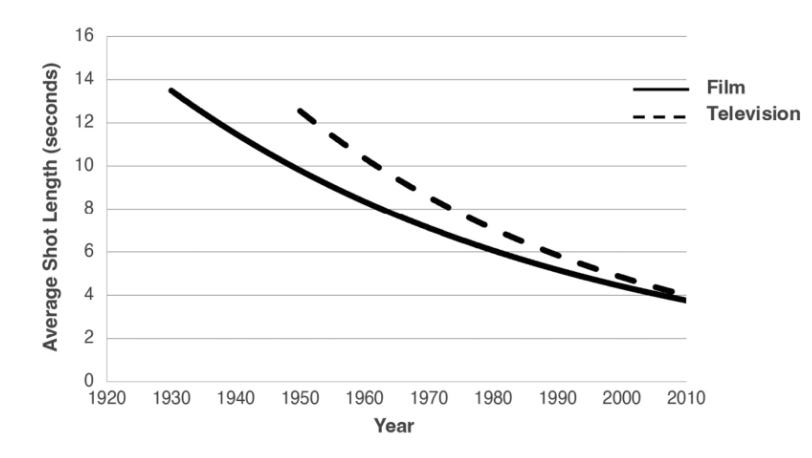
In 2021, the average hook length would be seen to be 3 seconds, now we see hooks to be 0.5 seconds before scroll ups happen.
There is also far more ad fatigue, and far more versions of different ads are needed to capture and hold attention, as otherwise it will not have as much retention or memory, and not be as effective. So in effect, the human role in advertising will shift far more to this injection of randomness, and demand for this is expected to go up substantially as increasing numbers of advertisements are needed as ad fatigue time has reduced so much in such a short space of time.